

The fastest way to make wing foiling hard is to buy gear that is too advanced for the early stages of foiling. The best foil setup for beginner riders is usually - bigger, steadier, more forgiving, and a lot less twitchy foils than what advanced riders are frothing over. If you want those first proper flights to happen sooner, your foil setup matters more than your bravery.
Wing foiling has a steep early learning curve, but it rewards smart equipment choices. Beginner winging and foil gear should help you stand up, get moving, control the wing and lift onto foil without feeling like every mistake ends in a swim. That means thinking about the whole setup as a package, not just chasing one standout component.
What makes the best wing foil setup beginner-friendly?
A beginner-friendly setup does three things well. It gets you up and balanced on the board, it gives you enough low-end power to start in modest wind, and it lifts early without suddenly taking off underneath you. This also means you can get out in lighter winds, which makes handling the hand wing easier.
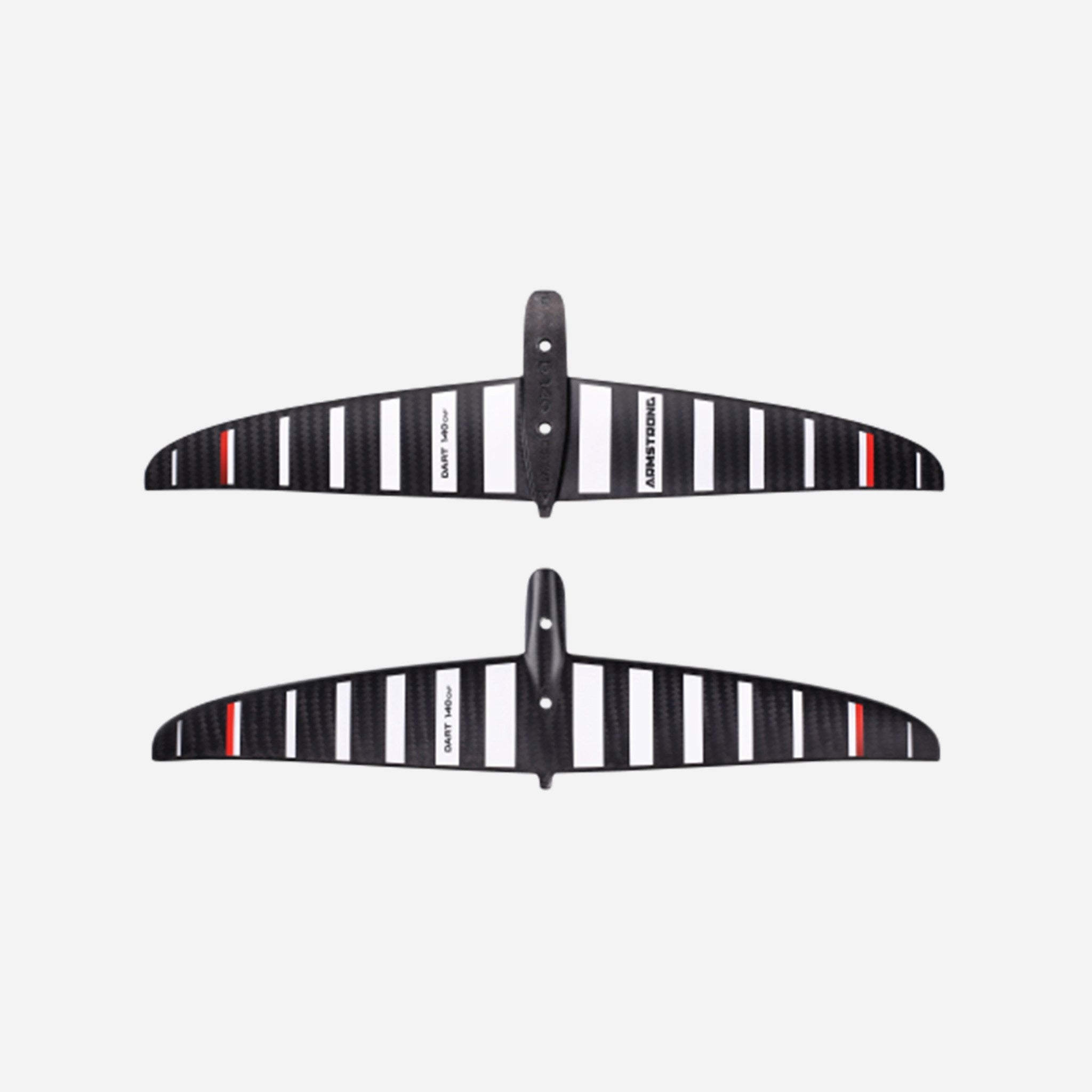
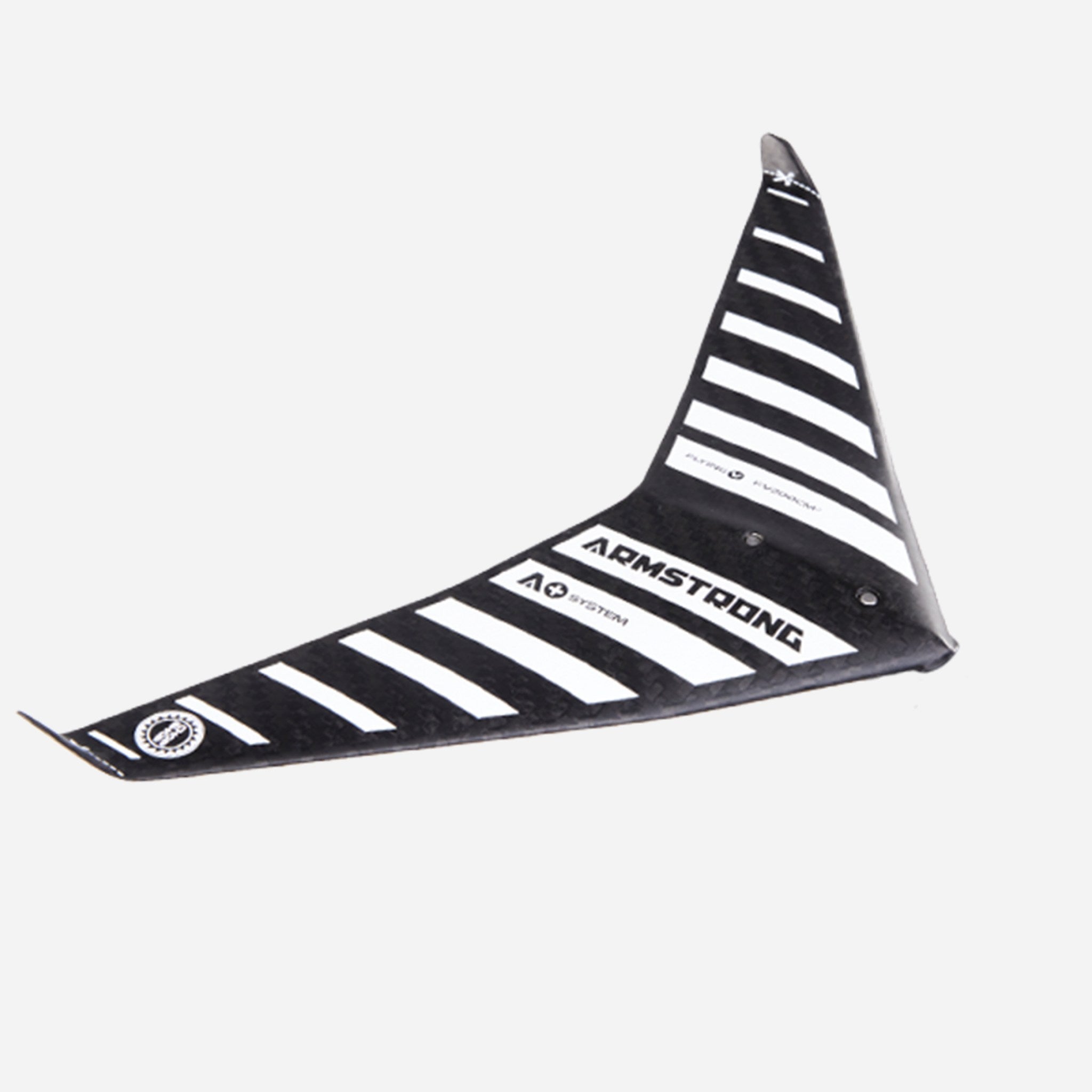
That usually points to a larger board (30L - 50L more than your body weight, is often ideal), a medium-to-large front foil (like the S1 foils from Armstrong), a shorter mast to start with, and a wing size that suits your weight and local conditions (5 - 6m oftent). For most adults learning in Australia, the sweet spot is not the smallest or lightest gear - it is the gear that smooths out your mistakes.
There is a trade-off, of course. Big forgiving gear will eventually feel slower and less lively. But that is a good problem to have later. In the beginning, easy progression beats high performance every day.
Start with the board, because that sets the tone
If the board is too small, everything else becomes harder. You will struggle to stand, harder still to control the wing, and almost certainly spend more time climbing back on than actually learning.
For most beginner wing foilers, volume is your friend. A common starting point is a board with roughly 30 to 50 litres above your body weight in kilos. So if you weigh 80kg, a board around 100 to 130 litres is a sensible place to begin. Heavier riders or anyone learning in lighter wind may want to lean to the upper end of that range. If you don't have great balance or board experience from other sport, lean towards a bigger board.
Board shape matters as much as raw volume. Wider boards with a stable outline are easier to stand on and much more forgiving during the awkward early stages. Compact shapes are popular now, but not every compact board is beginner-friendly. You still want enough width and deck stability to get comfortable before worrying about a more aggressive shape.
If you are learning on flat water in 15 to 20 knots, you can often go a touch smaller. If your local spot has chop, current or gusty wind, more volume makes life easier. That is especially true for east coast riders dealing with messy afternoon sea breezes.
A practical beginner board range
As a rough guide, many adult beginners start well on boards between 90 and 130 litres. Lighter riders can go below that. Bigger riders or cautious learners often progress faster on something with extra float. There is no prize for struggling on too little volume.
The foil is where beginners either click or suffer
A lot of first-time buyers focus on speed, glide or top-end performance. That is advanced-rider thinking. For your first setup, the foil should be stable, predictable and easy to lift at low speed.
The front wing is the key piece here. Beginner riders generally do best on a larger front wing with plenty of surface area and a shape built around early lift and control. Something in the broad ballpark of 1500 to 2200 square centimetres works for many learners, depending on body weight, fitness and conditions. Lighter riders may sit below that. Heavier riders may go above it.
A larger front wing helps you get flying earlier, and it gives you a slower more manageable take-off. That slower lift is important. Tiny high-aspect foils can feel amazing once you know what you are doing, but they often demand cleaner technique and more board speed than a beginner can consistently generate.
The stabiliser should match that calm, forgiving feel. You do not need a loose, skatey tail when you are still working out basic pitch control. A beginner setup should feel planted and confidence-building.
Mast length for learning
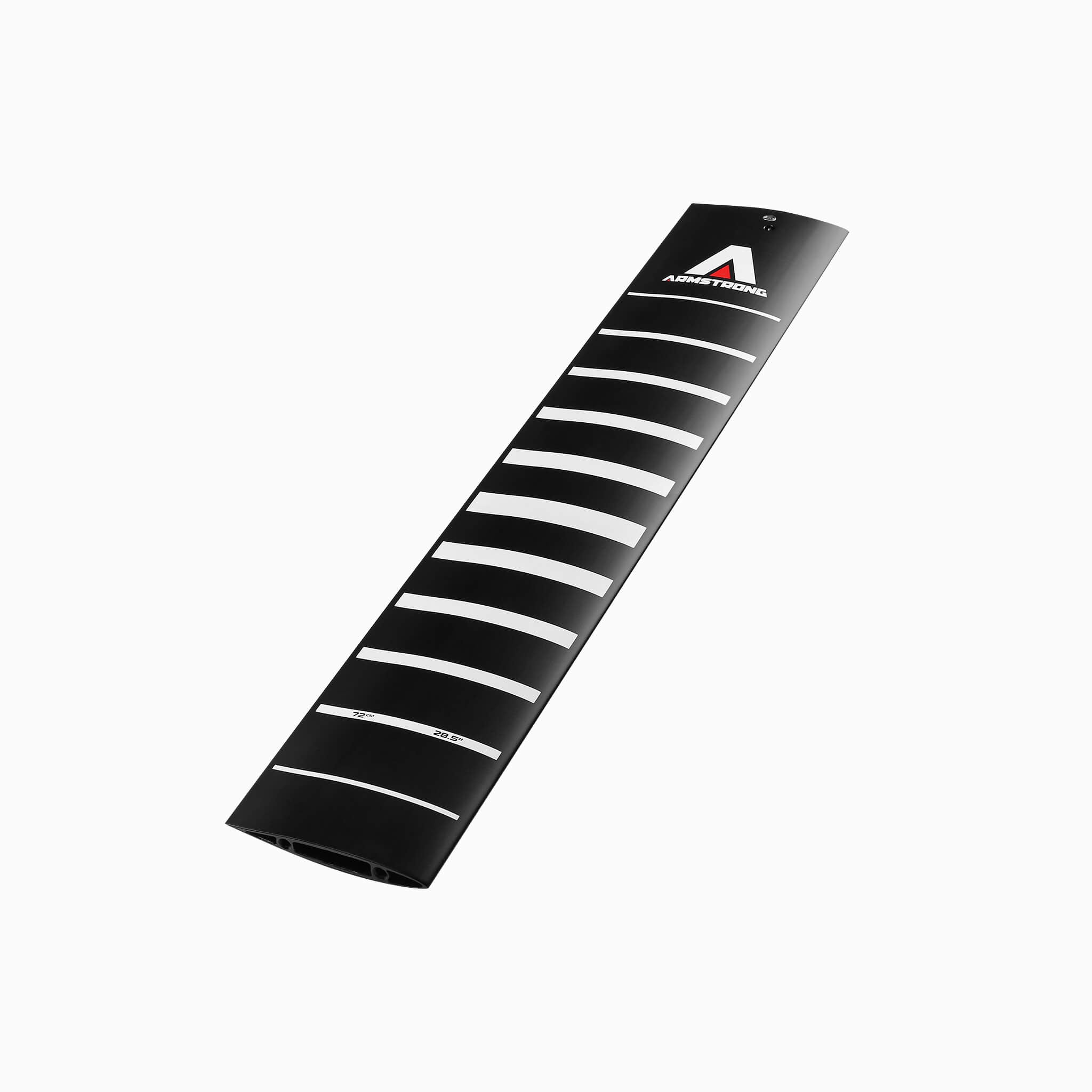
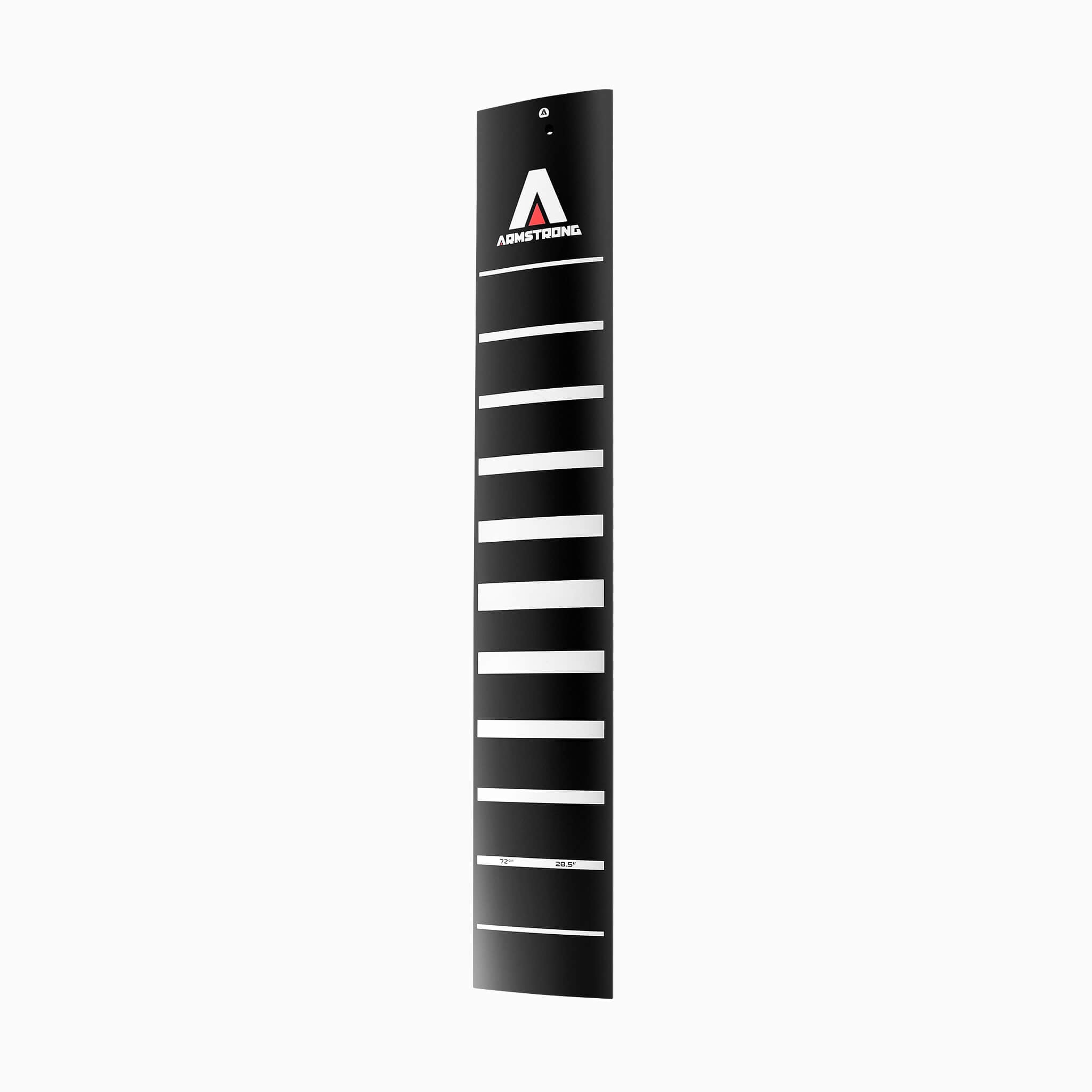
A shorter mast is usually the better call at the start. Around 70 to 75cm is a very friendly learning length. It keeps falls lower consequence, reduces the amount of lift change while you are learning height control, and helps in shallow or choppy spots.
Longer masts have benefits later, especially once you are riding through chop and carving with confidence. Early on, though, they can make every small mistake feel bigger.
Wing size should match your weight and your local wind
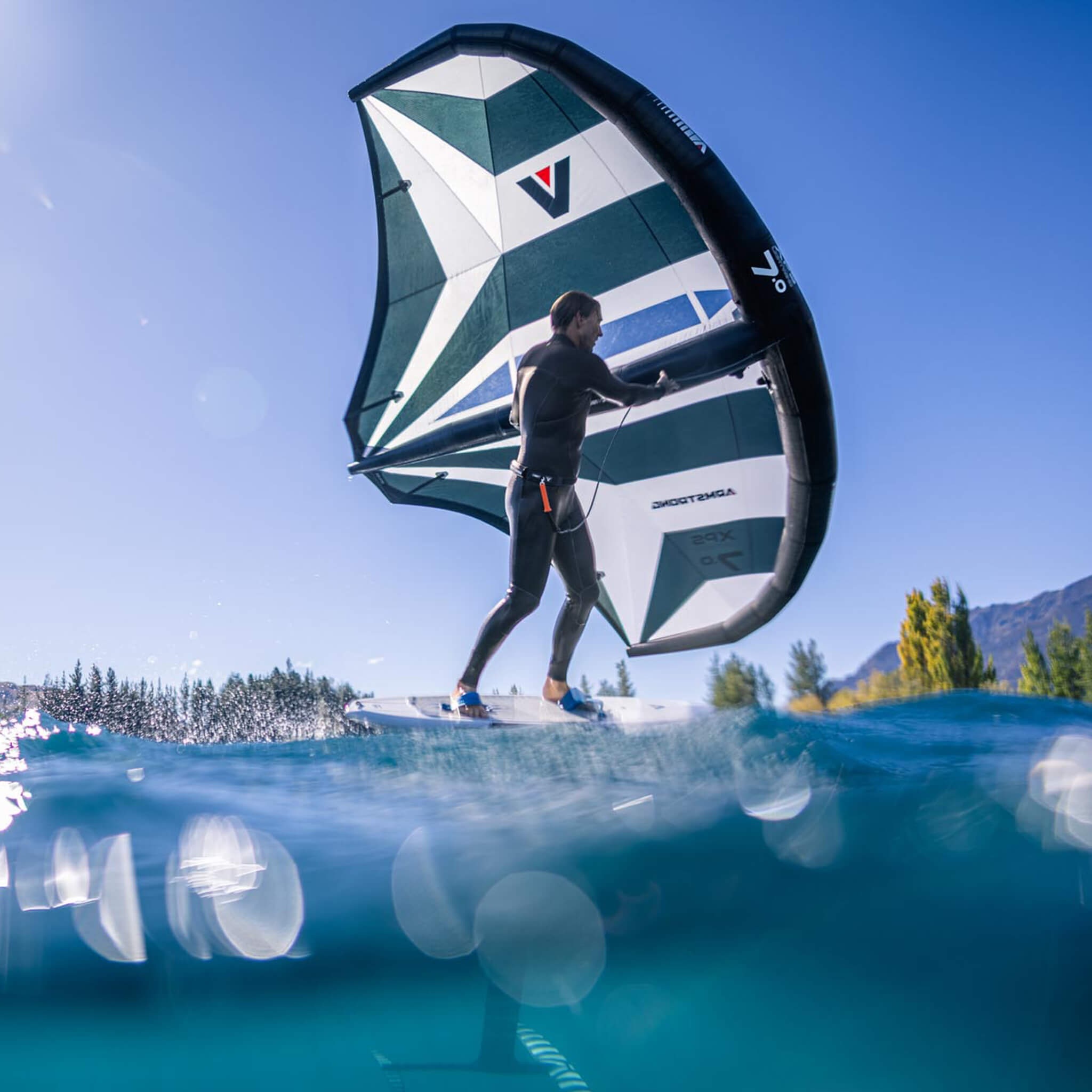
For many beginners, a 5m wing is the most versatile starting point. It works for a broad range of riders and typical Australian learning conditions. But it is not a universal answer. If your a bigger, taller riders a 5.5 or 6m can work better for you. This all depends on your board also. If you went bigger on board you can afford to have a smaller wing.
If you are a lighter rider, or your local spot regularly sees stronger wind, a 4m or 4.5m might be the better first wing. If you are heavier or commonly ride in lighter breezes, a 5.5m or 6m may make more sense. The goal is manageable power, not maximum grunt.
A beginner wing should be stable in the hands, easy to flag, and not too physically demanding. Ultra-light high-performance wings can be brilliant, but durability and ease of use matter too when you are dropping the wing, relaunching often, and figuring everything out.
Windows are a personal preference, but many learners appreciate them in busier locations. Handles versus boom comes down to feel. Neither will make or break your learning, but a straightforward, well-balanced wing usually matters more than the control system itself.
The best wing foil setup beginner riders should actually consider
If you want a practical starting formula, this is the setup that works well for a lot of adult learners.
Choose a stable board with enough volume to float you comfortably, usually body weight plus 20 to 40 litres. Pair it with a low-speed front foil around 1500 (EG: S11500 Armstrong foils beginner foil) to 2200cm2, matched to a forgiving stabiliser (MK 200 from Armstrong is often big enough but if you want ultimate stability the S1300 from Armstrong foils is great). Use a mast around 70 to 75cm for your first phase of learning. Then add a wing that suits your size and wind range, with 5m being the common all-rounder.
That combination is not flashy, but it gives you the best shot at standing, getting moving and having those first controlled flights without feeling wildly overgeared or under-supported.
Complete package or custom setup?
It depends on how much support you want and how sure you are about your direction in the sport. A complete beginner package takes a lot of risk out of the process because the components are chosen to work together. That matters more than many new riders realise.
A custom setup can be a smart move if you already know your local conditions, your likely progression path and which brands suit your style. Maybe you are crossing over from kiting, windsurfing or SUP foiling and want certain performance traits. But if you are brand new, compatibility and ease of use are worth more than trying to build the cleverest quiver on day one.
This is where specialist advice really earns its keep. A good retailer will ask about your weight, location, average wind, water state and previous board sports experience before recommending anything. That beats buying random gear based on social media clips every time. Feel free to call us on 0412 009 488 for first hand advice, to ensure you get the correct gear.
Mistakes that cost beginners time and money
The biggest mistake is going too small too early. Small board, small foil, tiny wing - it sounds advanced because it is advanced. It is also a shortcut to frustration.
The next mistake is buying for the conditions you hope to ride one day rather than the conditions you are actually learning in. If your local spot usually delivers moderate wind and some chop, your setup should reflect that reality. There is no point choosing a specialist downwind-style foil or tiny sinker board just because it looks exciting.
Another common trap is mixing components without thinking about how they behave together. A big stable board paired with an overly technical foil can still feel awful. So can a forgiving foil paired with a wing that is too powerful for your local breeze.
What changes as you progress?
Once you are consistently getting up on foil, riding both directions and recovering from touchdowns, your needs start to shift. You may want a smaller board for easier pumping and tighter handling, a smaller front wing for more speed and glide, or a second wing size to cover stronger wind.
That is when your first setup has done its job. It has not become a bad setup - it has become your progression platform. Many riders keep some of those beginner-friendly pieces for lighter days, teaching friends or building confidence in rougher conditions.
If you are buying well from the start, you are not wasting money on beginner gear. You are buying the right tool for the first stage of your progression.
Getting your first sessions right
Even the best setup will feel hard in poor conditions. Try to learn in steady wind, ideally on flatter water with room to drift and enough depth for the foil. Side-shore to slightly onshore wind is often friendlier than sketchy offshore breezes.
Take the time to set your gear up properly too. Mast position, footstrap placement if you use them later, and foil compatibility all affect how the board behaves. Small changes can make a surprisingly big difference, especially when you are learning where the board wants to lift.
At Stoked on Foiling, this is exactly why first-hand setup advice matters. The right package saves sessions, saves money and keeps the stoke high when the sport is still new.
The best beginner setup is the one that gets you flying sooner and wanting another crack tomorrow. Keep it stable, keep it forgiving, and let your gear help you progress instead of testing your patience. Once you get some basics down you can turn almost every day into a foil day. No matter what your question is about foiling, always feel free to reach out to us on 0412 009 488 or contact us online>>