


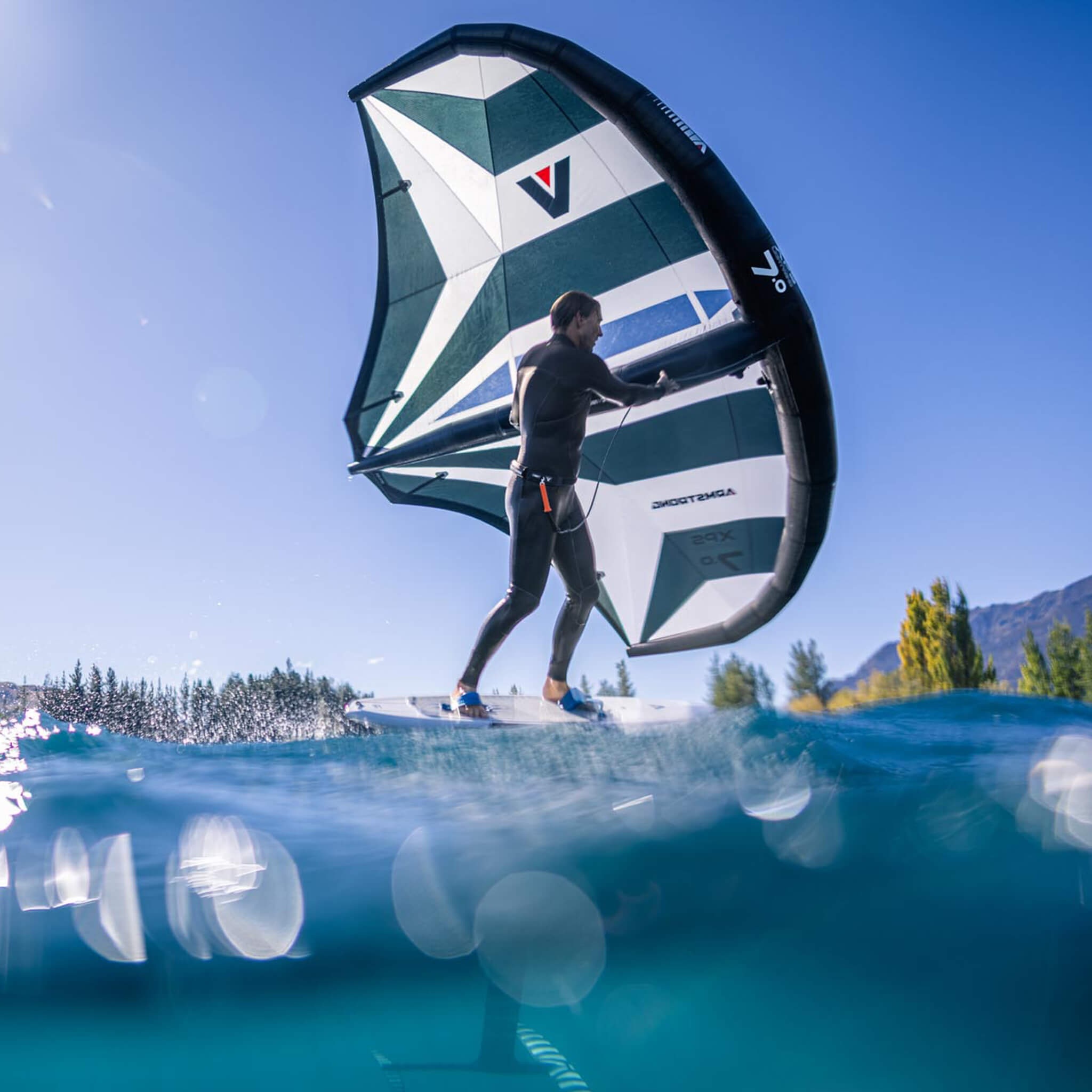
A good wing tells you what it is from the first powered reach. It either feels like it wants to pull you onto foil, accelerate through the gusts and sit calmly when you surf, or it asks you to constantly manage it. This F One Strike Wing review looks at why the Strike has earned such a loyal following among riders chasing a fast, direct and genuinely versatile wing foil set-up.
The short version: the F-ONE Strike is a performance-oriented all-round wing with a very broad sweet spot. It is not the softest or most relaxed wing for learning from zero, but for progressing riders through to experienced wingers, it delivers the drive, speed and control that make a session feel properly connected.
What the F-ONE Strike is built to do
The Strike has long been F-ONE's do-everything performance wing. It is designed for riders who want one wing range that can handle freeride laps, upwind work, jumps, waves and plenty of speed without feeling like a compromise in any one discipline.
That matters in Australian conditions. A wing that feels great cruising in 15 knots can become vague when a seabreeze builds to 25 knots. Likewise, a wing with plenty of bottom-end grunt may feel heavy or awkward when you are trying to flag it out on a peeling point break. The Strike aims for the middle ground, but it leans towards lively handling and efficient forward drive rather than easy-going, low-speed comfort.
Its profile, canopy tension and frame are all intended to create a crisp response. Pump the handles and the wing responds quickly. Sheet in and it develops useful pressure without needing to be overpowered. Let it out while riding a wave and it is designed to sit quietly rather than pull you out of position.
F One Strike Wing review: power and pumping
The Strike’s power delivery is one of its strongest points. It tends to build power progressively rather than hitting with a sudden on-off surge. That makes it easier to control in choppy water and variable wind, particularly when you are working through lulls or trying to get a smaller foil up early.
Pumping is sharp and efficient. Riders who already have their take-off timing sorted will appreciate how readily the wing converts a few committed pumps into forward movement. It is especially noticeable when paired with a foil that has reasonable low-end lift but still likes a bit of speed before it fully releases.
There is a trade-off. A very new rider may find a more compact, deeper-profile beginner wing easier to understand at walking pace. The Strike rewards decent technique. It will help you generate speed, but it is not there to hide a crouched stance, a poor board angle or a foil that is simply too small for the wind.
For intermediate riders, that is part of the appeal. The wing gives clear feedback. As your stance improves and your pumping becomes more deliberate, the Strike feels better and better rather than becoming something you outgrow after one season.
Handling, speed and upwind feel
The Strike feels quick through the wind window. It has a direct steering response and a light, positive feel through transitions, which is a big advantage when your sessions include carving gybes, tacks or powered jumps. It does not need a huge movement from your rear hand to change direction, so it feels precise rather than floppy.
That forward drive also helps with upwind angles. No wing fixes poor technique, but the Strike gives you the efficiency to settle into a comfortable stance, load the foil and make ground without endlessly oversheeting. For riders trying to get back upwind after a downwind run or position themselves for a wave bank, that efficiency saves energy and adds range to every session.
At the top end, the wing stays composed when correctly sized. The canopy tension helps prevent that unsettled, breathing sensation that can make a wing feel vague in strong gusts. You still need to choose sensibly. A 5 m wing is not suddenly a 3.5 m wing because the frame is good. If your local forecast is routinely strong, having the right smaller size is far better than trying to hang on with too much cloth.
How it behaves in waves and on the flag
A performance wing needs to be more than a powerful engine. Once you are on a wave, you want it out of the way. The Strike is well suited to riders who want to switch between powered riding and surfing the foil with minimal fuss.
When flagged, it has a balanced feel that helps it drift without dropping a wingtip or tugging at your front arm. This is not just relevant to dedicated surf foilers. Even on a small wind swell, a neutral wing lets you focus on rail pressure, foil pitch and the section in front of you instead of wrestling with the canopy.
The exact experience will depend on size, wind strength and the generation of Strike you are riding. Larger wings naturally carry more material and have more presence above your head. In marginal conditions, you will also be holding the wing more actively. But in the right wind range, the Strike has the control and neutral handling that make it a credible choice for wave-focused winging as well as freeride.
Jumping and freeride progression
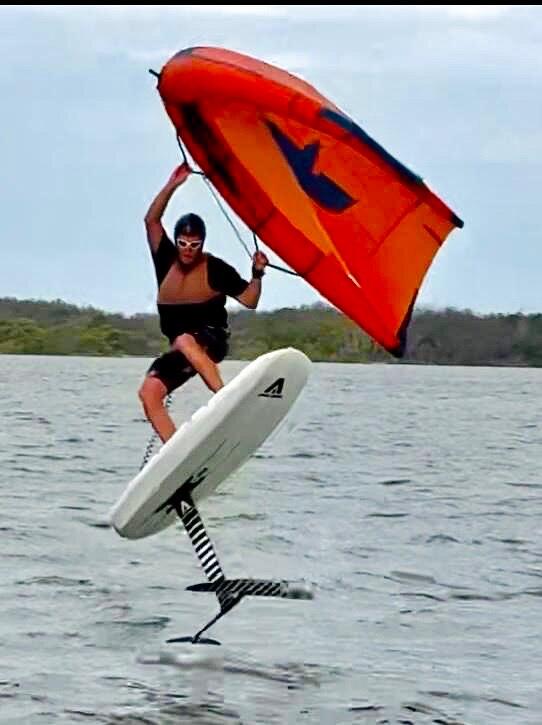
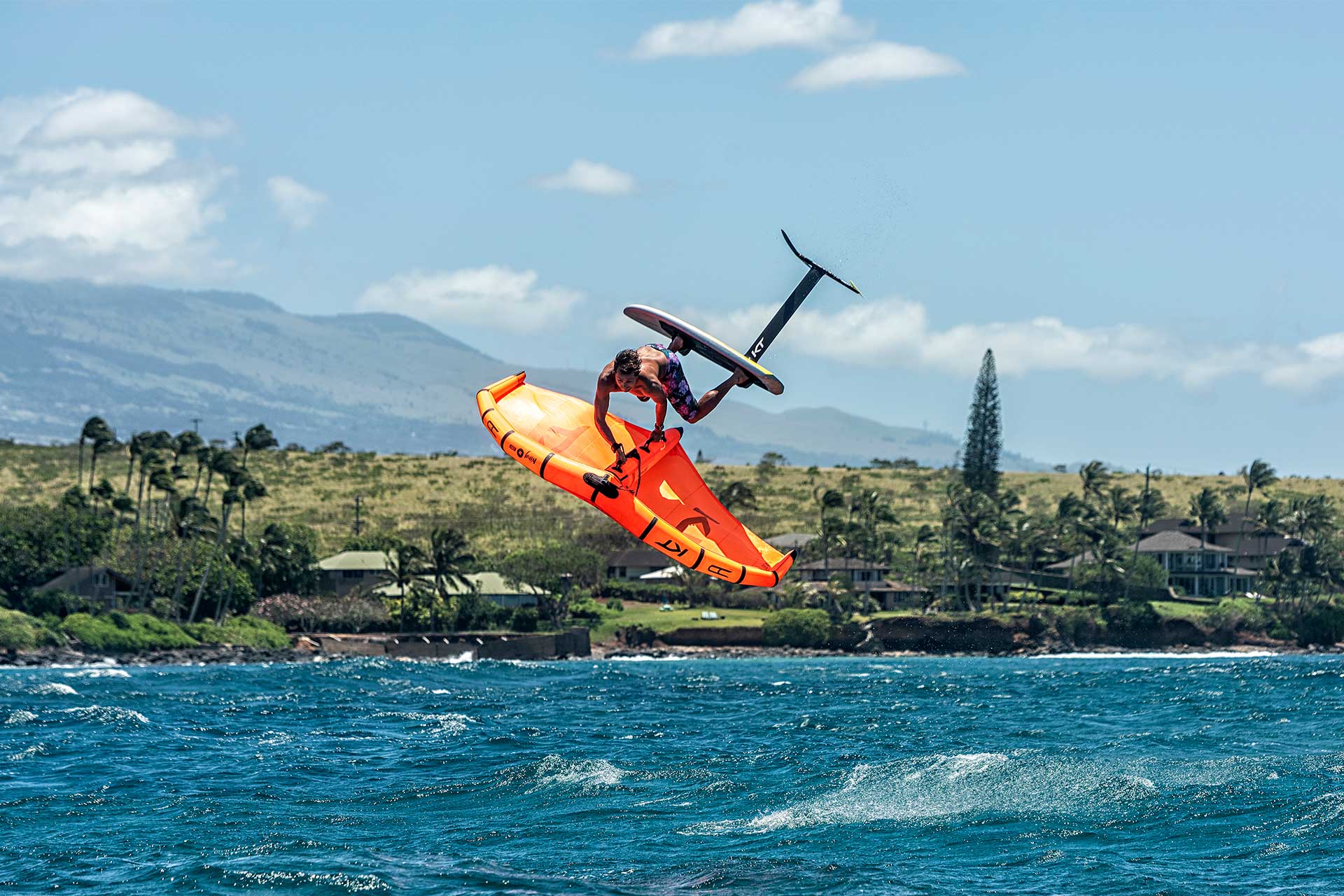
The Strike’s direct power delivery is a major plus for jumping. It loads predictably before take-off, gives you a solid feel as you send the wing overhead and remains easy to find on the way down. That confidence is valuable when you are moving from small hops to proper boosts, where timing matters far more than simply using a bigger wing.
For freeride, it is equally capable. It has enough low-end efficiency for relaxed cruising, enough speed to make flatwater sessions fun and enough control to keep developing your manoeuvres. A rider who has moved beyond the first few flights and wants to own one quality wing range for a mix of conditions will find a lot to like here.
It is worth separating freeride from beginner riding. A beginner can absolutely learn on a Strike with the right board, foil and wing size. However, riders who value maximum stability during their first waterstarts, slow handling and a very forgiving feel may be better served by a wing designed specifically around early progression. The Strike makes most sense once you are ready to use a wing’s performance rather than merely manage it.
Choosing the right Strike size
Size selection comes down to rider weight, board volume, foil area, local wind and your skill level. A 75 kg rider on a mid-size freeride foil will have very different needs from a 95 kg rider on a small high-aspect foil, even at the same beach on the same afternoon.
As a general starting point, many Australian riders build a two- or three-wing quiver around a mid-size wing for typical seabreezes, a larger wing for lighter days and a smaller wing for stronger wind. For plenty of riders, the middle size is where the Strike’s broad range really shines. It is the wing you grab for the session that could be 15 knots at launch and noticeably punchier by the time you are packing up.
Do not buy by square metres alone. A compact board, efficient foil and refined pumping technique can let you ride smaller. A learner board, heavier rider or gusty inland location may justify more area. Matching the wing to the complete set-up is how you avoid spending good money on gear that technically works but never feels quite right.
Who should buy the Strike?
The Strike is a strong choice for intermediate and advanced wing foilers who want a fast, responsive wing that crosses between freeride, surf and jumping. It also suits committed beginners who are buying once with a clear plan to progress, provided they choose a sensible size and pair it with stable learning-friendly foil gear.
It may not be the first pick for someone who only wants the calmest possible wing for their first few sessions, or for a rider who prioritises ultra-specialised downwind drift above powered performance. Those are different jobs, and the best wing depends on what you ride most.
The F-ONE Strike remains popular because it does the fun parts exceptionally well: it pumps with purpose, carries speed, tracks upwind, behaves in turns and lets you keep pushing your riding. If you are building a set-up around progression rather than a single perfect forecast, get advice on your foil, board and local wind range first. That small conversation can turn a great wing into the right wing.